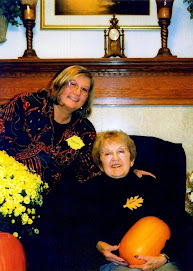
Mom's calling out had increased over the last 7-8 months, so about 3 months ago we had increased her psychotropic med to help with her "disordered" thinking. After about 6 weeks it became apparent, however, that it was making her more drowsy during the day, so we cut back. Also as a part of her med review, I talked to her geriatrician about putting her on a second Alzheimer's drug-Namenda. Although, I have felt the combination of one of the anticholinergic meds-Exelon/Aricept/Razedyne and Namenda is the optimal treatment, I had been reluctant to go against mom's geriatrician, as he is not a "fan" of Namenda. Namenda was started 3 weeks ago and she has improved significantly. Today we were discussing how we talk a great deal and she loves to have me discuss my day or whatever. She said "we talk alot-we echo each other." Now this is the first time in awhile that she has initiated a "clever" remark which was so much her "hallmark", so much what she did.
Today's medications are powerful and quite helpful. There is no "magic bullet" or "magic map", however, to tell us what to order or what will work the best for specific behaviors not responding to other interventions. Although by matching behaviors with meds for that behavior (i.e. anti depression drugs for depression), we often can see results, but, sometimes they do not work. It then becomes trial and error or trail and success. The secret is to never give up, and believe there is an answer.
In particular, it is important to remember that all people should be on both types of Alzheimer's Medication. The research shows that the two types of medication have a synergistic effect on functionality and preventing behaviors. For optimum effect the person should be started on the meds the earlier the better. Although even with the two medications there will be a decline. It will be much slower than if your loved one is not on the medications and their quality of life will be higher. It will not prolong the length of their life, only the quality of their life. These medications do not stop the ravages of the disease, but helps the tissue which remains to function at it's highest possible state. It is worth the expense, in my opinion, and the trouble for both you and your loved one.
May God Keep you in the Palm of Her Hand.
Showing posts with label Research-Alzheimer's Medication Impact. Show all posts
Showing posts with label Research-Alzheimer's Medication Impact. Show all posts
Sunday, June 27, 2010


Tuesday, December 8, 2009
Alzheimer's Medications: What makes a differance?
One of the requests made RE Research in our last poll was to talk about medications and their impact on the quality of life for the Alzheimer's Disease survivors. A while ago mom said to me, "you are a sweet heart" and I replied "you are a sweet heart also". She looked back me for a few seconds and then said "I guess we are just a couple of sweet hearts!!" Before Mom was put on her current Alzheimer's med, she was unable to inject this humor into a conversation.
The current Alzheimer's medications help to slow the decline of the disease. I help Directors manage residents behaviors and these medications have a positive impact. We also see a profound decline in the cognitive functioning in those who are taken off the med. Additionally more behaviors occur and they often seem to just enjoy life less. The common myth says "there comes a time when the person with Alzheimer's disease no longer gets benefits from these medications". Both the research and our experience shows discontinuing the med will precipitate a huge and very steep decline.
In our next posting, we discuss other Medications which make a difference. May God bless you and hold you in the pal of Her hand.
The current Alzheimer's medications help to slow the decline of the disease. I help Directors manage residents behaviors and these medications have a positive impact. We also see a profound decline in the cognitive functioning in those who are taken off the med. Additionally more behaviors occur and they often seem to just enjoy life less. The common myth says "there comes a time when the person with Alzheimer's disease no longer gets benefits from these medications". Both the research and our experience shows discontinuing the med will precipitate a huge and very steep decline.
In our next posting, we discuss other Medications which make a difference. May God bless you and hold you in the pal of Her hand.
Subscribe to:
Posts (Atom)

 Posts
Posts