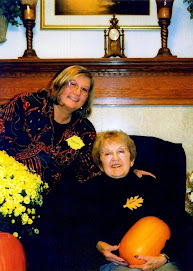
My Mom loved music. We grew up with music. My grandmother played the piano at most holidays especially Christmas. Dad gave us accordion lessons. It was Mom, however, who made sure we practiced and were ready for our lesson appointment. She encouraged us to do performances in the backyard or accordion recitals in the neighbors garage. She loved, and saw the value of music. The dilemma was discovering how to keep music as a part of her life and determining what was the most beneficial to her and to her quality of life.
The Alzheimer's Association has some current suggestions posted on their Website which we have used at Harbor House and I tried to insure, were used with Mom and the other residents at her assisted living. The first suggestion is to use "their" music-the music the person with dementia liked when they were younger. This may be big band music, country and western music, but always keeping in mind what was meaningful to them. Next, use the music before and after reminiscing as it sets the mood (gets the wheels turning so to speak). It is important,however, not to play the music during the reminiscing or other activities, as the music then, becomes a distractor during the reminiscing. The mind, confused by the dementia, can concentrate on only one thing at a time.
Perhaps the most important, and I believe the most neglected, is adding movement to the music. Whether this is clapping, dancing or wheelchair dancing. Wheelchair dancing involves the person sitting, but their upper body moving with the music as though they actually were dancing. This movement adds a kinetic or muscle memory to the experience and helps the event to tap into other memories involving this or similar music and similar movement. These are but a few of the important, but powerful components of the use of music in the quality of life of our loved ones. Give it a try and I believe you will see tremendous and even surprisingly positive results.
May God keep you in the palm of Her hand.
Sunday, June 12, 2011


Tuesday, May 31, 2011
Communication and Storytelling-Remembering Mom
With Mom being gone, life is full of adjustments. There are many reminders anything from continuing to go through her boxes of memorabilia to the occasional Blackberry reminders which pop up even though I have supposedly erased all the invites, the reminders continue. In going through one of her boxes I found a little poem about kisses. It must have been one of her favorites, but I never knew. It did remind me of a little interaction a few months before she passed. I got back in town when dinner was almost done so I came over and kissed her twice on her forehead as her mouth was full of food. "Well" she said "that was a double one". Now I have no idea what that meant or what she intended it to mean, but I tried to just go with it. "Yes" I said back to her, "I guess it is double trouble." She laughed and I proceeded to tell her about my day. I got a chuckle and we just went on.
Communication with people who have dementia can vary from being difficult to being VERY difficult. Whether it is someone who talks very little, to someone who talks a great deal but their word are entirely gibberish, they all present a real challenge. The best advise is do the best you can. Often it is about just picking out one word and going with it. There was some research from Duke University which indicates the most important element in communication is doing it. There is a natural tendency to talk less as our loved one talks less. The research indicates we do need to do exactly the opposite. We can talk about their history, your day your history or even the movie you saw over the weekend. A couple of years ago I was presenting to a Hospice group about this concept, and a young woman in the back raised her hand and said "I couldn't do that as I saw "Avatar" last weekend and it has blue people in it." I had to chuckle, but responded "well you are talking to an Irish woman, and we have had green people for hundreds of years." We all laughed, but the reality is "just doing" it is what is important. Just talking, creates a sense or normality, a sense I still count. Even if there is no response, the previously mentioned research showed that if the one way communication is carried out, there were more smiles and fewer behaviors over the next several hours. It DOES make a difference. Difficult as it is, continuing to carry on the one way discussion-becoming a storyteller-is great for our loved ones and in many ways good for us also. Do what you can. It gets easier as time goes on.
May God keep you in the palm of Her hand.
Communication with people who have dementia can vary from being difficult to being VERY difficult. Whether it is someone who talks very little, to someone who talks a great deal but their word are entirely gibberish, they all present a real challenge. The best advise is do the best you can. Often it is about just picking out one word and going with it. There was some research from Duke University which indicates the most important element in communication is doing it. There is a natural tendency to talk less as our loved one talks less. The research indicates we do need to do exactly the opposite. We can talk about their history, your day your history or even the movie you saw over the weekend. A couple of years ago I was presenting to a Hospice group about this concept, and a young woman in the back raised her hand and said "I couldn't do that as I saw "Avatar" last weekend and it has blue people in it." I had to chuckle, but responded "well you are talking to an Irish woman, and we have had green people for hundreds of years." We all laughed, but the reality is "just doing" it is what is important. Just talking, creates a sense or normality, a sense I still count. Even if there is no response, the previously mentioned research showed that if the one way communication is carried out, there were more smiles and fewer behaviors over the next several hours. It DOES make a difference. Difficult as it is, continuing to carry on the one way discussion-becoming a storyteller-is great for our loved ones and in many ways good for us also. Do what you can. It gets easier as time goes on.
May God keep you in the palm of Her hand.
Friday, May 20, 2011
Funerals, Memorials and Other Greiving Processes
It has been over 2 months since Mom has passed. The Hospice which cared for Mom had a Memorial service for everyone who had died in the last 12 months. I thought I was ready for such a service, but it was very difficult. We were asked to say something as a tribute to our loved one and I could barely get through it-a surprise to me! I guess we all believe we are stronger than we are!!
Grieving is a strange and in many ways a counter intuative experience. It very much has it's cycles. It however definitely is not an A to Z experience. In other words it is more likely to be A to F to C to L to G etc. There are certainly ups and downs which take you backwards as well as forward. It is also an emotional experience at times and an intellectual experience at others. It is one thing to believe your loved one is "in a better place" and quite another to be able to let go. One can truly believe "It was their time to go" but still miss their loved one terribly. Much of the bereavement literature talks of grief as a process. Grieving is billed as a normal part of life. That however ,does not makes it any easier, quicker, or shorter. I did not think I would need or use the bereavement services offered. I guess I was wrong.
Mom, we would not wish you back, as we know you are in a better place, but we miss you terribly.
May God keep you in the palm of Her hand.
Grieving is a strange and in many ways a counter intuative experience. It very much has it's cycles. It however definitely is not an A to Z experience. In other words it is more likely to be A to F to C to L to G etc. There are certainly ups and downs which take you backwards as well as forward. It is also an emotional experience at times and an intellectual experience at others. It is one thing to believe your loved one is "in a better place" and quite another to be able to let go. One can truly believe "It was their time to go" but still miss their loved one terribly. Much of the bereavement literature talks of grief as a process. Grieving is billed as a normal part of life. That however ,does not makes it any easier, quicker, or shorter. I did not think I would need or use the bereavement services offered. I guess I was wrong.
Mom, we would not wish you back, as we know you are in a better place, but we miss you terribly.
May God keep you in the palm of Her hand.
Friday, April 29, 2011
Death Certificates and Other Information About Alzheimer's
Mom passed away about 6 weeks ago. I will be receiving her death certificate in the mail in the next day or two. Now you may wonder why this would be a subject for the blog. For so long, we have very sparingly used Alzheimer's Disease as the cause of death. Like my Mom, many people with Alzheimer's Disease develop pneumonia and die. They also die of eating disorders, weight loss, falls, hip fractures caused by decreasing ability to safely walk and loss of balance. These are often, however, used as secondary diagnosis and are not listed as the cause of death. We are beginning to understand, however, the significant, primary role, Alzheimer's Disease has in the death of our loved ones. The role is huge and it is the cause of death, more often than it is given credit.
Alzheimer's Disease DOES cause people to die. It depletes the body by depriving it of nutrition, depriving it of mobility, and other necessities of life on the cognitive level. More importantly, Alzheimer's disease kills brain tissue. The brain is the center that tells all of the bodies organs to function as they should. It tells the heart to beat properly, the lungs to exchange oxygen, and the pancreas to produce insulin. At the subconscious level, all bodily functions are regulated in their proper order, by the brain. As Alzheimer's Disease destroys the brain tissue, there is less and less functional matter to regulate these processes. Eventually the brain does not have enough tissue to direct the body and coordinate it's maintence so the the person dies. Mom was a perfect example. Her body was depleted- she weighed only 89 pounds. She was able to take only 1-2 steps per day and she was able to drink in limited amounts. Although she did develop a bronchitis/pneumonia, a stronger person, with reserves in her body and her brain, would have been able to fight it off. Her dementia was so progressed, her brain so devastated, it could not continue. We now recognize that people with Alzheimer's do die from the disease. It is the cause of death more often then we acknowledge. In spite of the diagnosis on the death certificate, I know Mom passed from this terrible disease. It was her time and I would not wish her back. I miss her terribly, but I do recognize her death came from Alzheimer's Disease. I will continue to do what I can for the people with this disease and for the families who suffer for and with their loved one with the disease. This is all any of us can do until there is a cure or a true treatment for the disease. We all must continue to struggle and move forward in our journey.
May God keep you in the palm of Her hand.
Alzheimer's Disease DOES cause people to die. It depletes the body by depriving it of nutrition, depriving it of mobility, and other necessities of life on the cognitive level. More importantly, Alzheimer's disease kills brain tissue. The brain is the center that tells all of the bodies organs to function as they should. It tells the heart to beat properly, the lungs to exchange oxygen, and the pancreas to produce insulin. At the subconscious level, all bodily functions are regulated in their proper order, by the brain. As Alzheimer's Disease destroys the brain tissue, there is less and less functional matter to regulate these processes. Eventually the brain does not have enough tissue to direct the body and coordinate it's maintence so the the person dies. Mom was a perfect example. Her body was depleted- she weighed only 89 pounds. She was able to take only 1-2 steps per day and she was able to drink in limited amounts. Although she did develop a bronchitis/pneumonia, a stronger person, with reserves in her body and her brain, would have been able to fight it off. Her dementia was so progressed, her brain so devastated, it could not continue. We now recognize that people with Alzheimer's do die from the disease. It is the cause of death more often then we acknowledge. In spite of the diagnosis on the death certificate, I know Mom passed from this terrible disease. It was her time and I would not wish her back. I miss her terribly, but I do recognize her death came from Alzheimer's Disease. I will continue to do what I can for the people with this disease and for the families who suffer for and with their loved one with the disease. This is all any of us can do until there is a cure or a true treatment for the disease. We all must continue to struggle and move forward in our journey.
May God keep you in the palm of Her hand.
Sunday, April 17, 2011
Mom's Passing-Grief and More
It has been a month since Mom passed. I believe the transition to life without Mom has provided several life insights which I want to share with all of you. Before I do that, I want to pass on some of the things Mom did to help make this new phase of our lives easier. Mom had a very nice list of things which she wanted at her wake and funeral. Items she specified which were very helpful such as what hymns she wanted at her funeral mass: "Old Rugged Cross" and the prayer she wanted on her wake card. She also specified pallbearers and people she wanted to read at her funeral. She also prepared an outline for her Obituary. These do not seem large, listing them now, but did feel huge and extremely comforting when she passed. To know these are items she chose and we could now carry out on her behalf was immensely straightening for us. I was so grateful that I did something similar, as a gift for my sons. They of course will not truly appreciate it until my death as I did not truly understand the value of having these things specified, until Mom passed. Now on grief, I know you can never predict how you will react to your grief. I was so very fortune to have my brother here with me for a week after Mom's passing. We had many hours to talk, laugh and sometimes cry. We went through her clothes, her jewelry and the several collections she had of bells, angels and crosses. None of this put me into a grieving place. The one thing which hit me so very hard, was cancelling her Charter cable account. Go figure!! My wonderful husband finally asked me if he could go ahead and do the cancellation. Because it was in my name, he needed me, however, to give verbal permission. After simply saying yes, I was put into a long crying bout and several hours of solitary grieving. I now understand much better what I have heard grief counselors say for years. "You will not be able to see into the future and know how you will react." There is nothing fair, consistent, or reasonable about how you grieve. I do truly believe Mom is in a better place. She looked very much at peace. It was her time and she was ready. My tears are probably for me more than for Mom. I do miss her, but it would be selfish for me to wish her back. I saw her everyday, so there is a big hole left by her passing. I know that my largest task now is to create a new "normal" in my life. One of the grief counseling guides given to by Hospice reminded me "the way out of grief is through it" It is now part of my journey and I am ready to embrace it. Thanks to everyone for all the kind words, support and prayers. Life goes on. May God keep you in the palm of Her hand.
Sunday, April 10, 2011
Mom's Passing-May She Rest In Peace
My Mom passed away on March 14th. At this time the Blog seemed to be gone. for the last 3 weeks my very able IT guy has been working on getting back up and running. He finally succeeded!! So we are back!! I wanted to post a modified Obituary. I just hope Mom didn't have a hand in making it disappear!! I am quite sure she did not however !! She always enjoyed my reading the posts to her and I loved hearing her comments. Here is a summarized version of her obituary and I will post next week a bit about her passing. Thanks to all who have sent their love and support and prayers. Helen Foley Mom, 86 passed quietly away, March 14th at her assisted living facility after a short illness. she was born on August 11th 1924, in Eastman WI, of parents August and Anna (Zlabek) Moeller. She married John Foley at St. Patrick's Catholic Church in Seneca WI in 1945. They moved to Dodgeville WI in 1958. John passed away in 1998. Because John was in poor health, she lovingly cared for him for 20 years. They enjoyed traveling extensively including internationally. She was an active member of St. Joseph's Catholic Church Helen was the chief cook at St. Joseph's School for 23 years. She was a tour guide at the "House on the Rock"for 7 years. She was a crossing guard for the city of Dodgeville and tutored for 5 years at St. Joseph school. She was a published author of "Rage of Ambition" published by Badger Books in 1991. She is survived by 3 children Delores, Kathy and Kirk, 4 grandchildren and 10 great grandchildren. Mom was a grand lady, superb Mom and an all round terrific person. We often called her a "character" as she was always helpful to others and always made life interesting for those of us around her. May she rest in peace. May God keep you in the palm of Her hand. I know she has Mom!!
Sunday, March 6, 2011
Research Exercise and Mobility
In a few days we will come to our 2nd anniversary of Mom's Physical Therapist's decree that Mom was no longer "safe" walking with her walker. Mom is now walking only about 10 feet daily. Mom has gone through some health challenges in the last several weeks which has restricted her ability to walk and many days she was only able to stand for 5-10 seconds. Yesterday when we were walking her 10 feet (down from 150 feet 2 years ago) she looked at me and said "are you sure this is worth it?". It was a good question because walking even this short distance is a real struggle for Mom. There is also the question of being realistic. Over the last 20 years of Harbor House I have certainly come across families who were not realistic and I wanted to search my soul to be sure this is not the case for me. In the last two years, I have been the only one who is walking Mom. Since I am with her everyday, I was able to help her to maintain the walking safely. I am proud to report there has never been a fall in the two years, obviously it has been safe. I then replied "yes Mom, this is tough but keeps you in a good place. You have always been in favor of exercise, right?" Her reply was quick, but not necessarily cheery! "Yes, yes" she said "when can I sit down!"
The reason I could fairly quickly answer affirmatively regarding the need to keep as mobile as possible and exercise when you can even if you have Alzheimer's disease or a related dementia is simple. The research is clear. There is an ever increasing body of knowledge, reinforcing the positive effects of exercise and keeping as active as possible. The Wisconsin State Alzheimer's Conference in May, for example, has 3 presentations RE Exercise and Mobility in Dementia. The subtopics range from prevention of dementia, to preventing premature disability from not using your muscles etc. Keeping as active as possible is becoming increasingly researched and the results point to the need to keep moving. I would encourage everyone to look at publications from organizations like AARP which almost monthly have articles displaying the positive side of exercise whether a senior has Dementia or not. When possible advocating for our loved ones to keep mobile will make a difference.
May God keep you in the palm of Her hand.
The reason I could fairly quickly answer affirmatively regarding the need to keep as mobile as possible and exercise when you can even if you have Alzheimer's disease or a related dementia is simple. The research is clear. There is an ever increasing body of knowledge, reinforcing the positive effects of exercise and keeping as active as possible. The Wisconsin State Alzheimer's Conference in May, for example, has 3 presentations RE Exercise and Mobility in Dementia. The subtopics range from prevention of dementia, to preventing premature disability from not using your muscles etc. Keeping as active as possible is becoming increasingly researched and the results point to the need to keep moving. I would encourage everyone to look at publications from organizations like AARP which almost monthly have articles displaying the positive side of exercise whether a senior has Dementia or not. When possible advocating for our loved ones to keep mobile will make a difference.
May God keep you in the palm of Her hand.
Sunday, February 20, 2011
Psychotropic Meds and Alzheimer's Disease
Recently I met with the Medical Director of Mom's Hospice group. Mom continues to deteriorate and we discussed this decline and the level of her psychotropic or mind altering medications. We had first used the Alzheimer's meds and then added a med which seems to help with her "disordered thinking." Before these two types of meds were ordered, she called out, "help" much of the time and seemed "tormented." After the meds she was much more able to carry on a conversation and be content. As she has declined, however, we wondered if perhaps less medication would be appropriate. We decreased the dose about 10 days ago and now she seems less settled, less at peace. We will return her meds to the original level.
Now it would be easy to look at this decrease as a "mistake", but it is important to remember that a bit of trial and error in med levels is necessary when dealing with the disease. As the person with Alzheimer's Disease declines, their brain is shrinking, actually dying. This deterioration may also dictate we decrease their psychotropic meds as what their brain needed 9-12 months ago may not be what is needed now. If we never try to decrease the meds we will never know if a lower dosage may be the appropriate. It may seem like trial and error and in fact it is. There is no absolute blue print for the med level in this disease. We always do want to have the lowest level of meds possible which also gives a quality of life to our loved one. The process is not easy, it is not clean and neat. It is a necessary balancing act. Only one more difficult, but necessary struggle in the tough fight against this awful disease.
May God hold you in the palm of her hand.
Now it would be easy to look at this decrease as a "mistake", but it is important to remember that a bit of trial and error in med levels is necessary when dealing with the disease. As the person with Alzheimer's Disease declines, their brain is shrinking, actually dying. This deterioration may also dictate we decrease their psychotropic meds as what their brain needed 9-12 months ago may not be what is needed now. If we never try to decrease the meds we will never know if a lower dosage may be the appropriate. It may seem like trial and error and in fact it is. There is no absolute blue print for the med level in this disease. We always do want to have the lowest level of meds possible which also gives a quality of life to our loved one. The process is not easy, it is not clean and neat. It is a necessary balancing act. Only one more difficult, but necessary struggle in the tough fight against this awful disease.
May God hold you in the palm of her hand.
Sunday, February 13, 2011
Alzheimer's Research-Mom Knows Best
Recently I presented some of the latest research to our leadership group. When I got to mother's assisted living facility, I began relating my day to Mom as I usually do. This seems to be enjoyable to her and it gives me a place to start, as carrying on a conversation becomes more and more difficult. I started listing some of the remarkable advancements and how they were breakthroughs which could make a real difference in the future. Toward the end of this, Mom said "Can any of this help me?" It rather broke my heart, as she was so right, none of this research was in time to help her. She then surprised me, stating "I am just glad somebody is doing something, this is so terrible." It had been a long time since she had mentioned her pain with the disease. I, in fact, had thought she progressed beyond even understanding the pain, but this interaction helped me to understand, she still, at least sometimes, has the pain, but was thinking still of others.
What is some of the newer research? First, we are now beginning to understand that the amyloid plaques, which Dr. Alzheimer found on autopsy in 1906, are formed because the brain of the person with the disease can't dispose of this normal protein. it's like having a clogged drain. Could a medication in the future help this problem? Secondly, we know there are times when we make more of the normal protein than others. When we are daydreaming we make large amounts of the protein and when we are focused in a deep thinking task for a long period we slow down the production of the protein. Also in deep sleep we produce less amyloid protein. How could we keep our brain in this focused states more of the time so we would not have the large amounts of the protein to dispose of, naturally or with a medication? Thirdly, there is more research looking at the relationship between higher education and Alzheimer's disease. It is exciting to see the progress of research in this field. If you go back 20 years the research was much more sparse. We are making real progress!! Thanks to all.
May God keep you in the palm of Her hand.
What is some of the newer research? First, we are now beginning to understand that the amyloid plaques, which Dr. Alzheimer found on autopsy in 1906, are formed because the brain of the person with the disease can't dispose of this normal protein. it's like having a clogged drain. Could a medication in the future help this problem? Secondly, we know there are times when we make more of the normal protein than others. When we are daydreaming we make large amounts of the protein and when we are focused in a deep thinking task for a long period we slow down the production of the protein. Also in deep sleep we produce less amyloid protein. How could we keep our brain in this focused states more of the time so we would not have the large amounts of the protein to dispose of, naturally or with a medication? Thirdly, there is more research looking at the relationship between higher education and Alzheimer's disease. It is exciting to see the progress of research in this field. If you go back 20 years the research was much more sparse. We are making real progress!! Thanks to all.
May God keep you in the palm of Her hand.
Sunday, January 16, 2011
Death and The Truth an Alzheimer's Dilema
My uncle recently died. He was 90. He and my aunt (my Mom's sister) lived in an assisted living across town. He "took care" of my aunt Marie in the assisted living every day. She has quite profound dementia and as it is so often the case, his health was seemingly fairly good for 90, but he passed first. As I went over to Mom's assisted living, I weighed telling Mom the truth or just leaving her in peaceful ignorance. I decided to give her the news. Upon telling her of uncle Merit's death she said "many of us are dying these days aren't we"? She did not seem upset just reflective.
It is often a dilemma as to delivering "bad news". Is it better to tell the person with Dementia and potentially up set them or not tell them and have them not fully understand what is going on in the world around them. There is no right or wrong answer as whether we should tell someone with dementia or not. The reality is people with dementia forget. If they become upset with the news of a death for instance, but the reality is they will probably forget. If it was upsetting, it is probably best not to repeat the information. You have informed the person, but there is no need to force them to relive the event over and over. If however they were not upset you may want to tell them more than once. Again there is no right or wrong answer. Listening to your heart will show you they way.
It is often a dilemma as to delivering "bad news". Is it better to tell the person with Dementia and potentially up set them or not tell them and have them not fully understand what is going on in the world around them. There is no right or wrong answer as whether we should tell someone with dementia or not. The reality is people with dementia forget. If they become upset with the news of a death for instance, but the reality is they will probably forget. If it was upsetting, it is probably best not to repeat the information. You have informed the person, but there is no need to force them to relive the event over and over. If however they were not upset you may want to tell them more than once. Again there is no right or wrong answer. Listening to your heart will show you they way.
Sunday, December 26, 2010
Holidays-A Tale of Love or Not
Yesterday when we went to see Mom, open presents and sing Christmas caroles, I also went through the previous day happenings. Christmas Eve is the big day in our family. My husband and I as well as our son's and their families stopped after church and prayed with her and opened her presents. Then went to the house opened presents, sang Christmas caroles and helped played a lot of games. In telling her of all of this, as I do each day and did yesterday, she looked at me and said "I wish I could be you" This brought tears to my eyes, and a huge sadness. I knew what she meant. I wish I could do anything I wanted to, I wish I could have a complete life, I wish I didn't have Dementia!! That was all she could articulate, however.
Everyone loves the Holidays, but it can be a mixed bag. We love the family time. giving the special gifts and the wassail!! It often times brings a bit of nostalgia and reminders of Christmases past. It brings a realization that no matter how "perfect" the day is it is never the same as it once was. Dementia takes away some of our most cherished memories, traditions, and even people. The Holidays certainly brings all of this to the surface. I believe the best we can do is enjoy the good and try not dwell on those less pleasant memories. Happy Holidays to all!!
May God keep you in the palm of Her hand.
Everyone loves the Holidays, but it can be a mixed bag. We love the family time. giving the special gifts and the wassail!! It often times brings a bit of nostalgia and reminders of Christmases past. It brings a realization that no matter how "perfect" the day is it is never the same as it once was. Dementia takes away some of our most cherished memories, traditions, and even people. The Holidays certainly brings all of this to the surface. I believe the best we can do is enjoy the good and try not dwell on those less pleasant memories. Happy Holidays to all!!
May God keep you in the palm of Her hand.
Sunday, November 28, 2010
Holidays-Stress and Joy
I just got back from putting out Mom's Xmas Decorations. This is always a time when Mom seems to get more sentimental and also more demanding. I also become more sentimental but more sensitive. This is not a great combination. I remember one of the last Christmas Holidays I was leaving after 20-25 minutes and I usually stay an hour. She turned to me and said "if you loved me you would stay longer!" Now I know it was the "dementia talking" not Mom, but somehow I am reliving that and other moments from past holidays. I understand intellectually that I need to move forward, but this is easier said than done!
Holidays can be stressful when your loved one has Alzheimer's or another dementia and I will discuss some of the things you can do help with this stress. Today, however, I want to just begin with asking all of us to get into the right frame of mind. At Christmas, or whatever holiday you celebrate at this time of the year, you need to remember to focus on the joy and wonderful things that will occur, not expect perfection. Keep it simple and remember the love you and your special person have for each other.
More on this holiday topic soon
May god keep you in the palm of Her hand.
Holidays can be stressful when your loved one has Alzheimer's or another dementia and I will discuss some of the things you can do help with this stress. Today, however, I want to just begin with asking all of us to get into the right frame of mind. At Christmas, or whatever holiday you celebrate at this time of the year, you need to remember to focus on the joy and wonderful things that will occur, not expect perfection. Keep it simple and remember the love you and your special person have for each other.
More on this holiday topic soon
May god keep you in the palm of Her hand.
Sunday, November 7, 2010
Mobility in Dementia-More Issues
Recently, when I was assisting Mom in her daily walking, she said "this feels good". I was on cloud nine, so to speak!! This came to a screeching halt, moments later when she said "this hurts, God in heaven, can you help me?" Of course, I do not wish to have Mom suffer, but I do know the research and how important it is to keep people with dementia moving. It is very much a "move it or loose it" scenario. What is the compromise? Almost 2 years ago we were told Mom was not safe to walk by a physical therapist. My response was to take responsibility for her daily walk. She now walks 50-60 feet not 150 feet that she was walking 2 years ago, but she IS still walking and she has never fallen. Mom also participates in the morning exercises if she is not dozing in the chair!! So Mom, in spite of her progressed dementia, is fairly active.
We have talked previously about the research and the positive effects that walking and other excising presents for the elderly in general, and also for our loved ones with Alzheimer's disease and other dementia's. Whether it is the issue of keeping muscles and tendons from contracting and becoming immobile, or keeping good skin integrity through better circulation, or producing more positive hormones in the body such a serotonin and endorphins in small amounts, among other positive effects, keeping the body active is extremely helpful. There of course, must be a balance between safety and mobility, but it must be remembered that keeping active in itself prevents falls and thus increases safety. Life and dementia are both ultimately about finding this balance.
May God keep her in the palm of Her hand.
We have talked previously about the research and the positive effects that walking and other excising presents for the elderly in general, and also for our loved ones with Alzheimer's disease and other dementia's. Whether it is the issue of keeping muscles and tendons from contracting and becoming immobile, or keeping good skin integrity through better circulation, or producing more positive hormones in the body such a serotonin and endorphins in small amounts, among other positive effects, keeping the body active is extremely helpful. There of course, must be a balance between safety and mobility, but it must be remembered that keeping active in itself prevents falls and thus increases safety. Life and dementia are both ultimately about finding this balance.
May God keep her in the palm of Her hand.
Sunday, October 31, 2010
Another Dietary Issue
When strawberries are in season I often bring Mom strawberry short cake. Food has always had a love-hate component in her life, as keeping weight off has always been an even bigger issue. She did, however, love to cook and loved to present her family with delicious, great looking food. Thus food was important on numerous levels. When I brought the strawberry short cake into her a few days ago, she said "thank heaven for some real food". What I found out was several days earlier, the facility had started to puree her meat and grind the rest of her food. I immediately got this order reversed.
When a person with dementia takes a long time to eat, a long to chew or generally is having eating problems the answer is often to go straight to a pureed diet. For swallowing problems or true chewing problems, grinding the meat or mashing the vegetables may well be the answer. Pureed food should be the very last resort for severe swallowing or choking problems. By pureeing food it takes away the texture from the food, removes any visual appeal and creates a generally unsatisfying mush.
Thickening liquids can also create more swallowing and hydration problems than it solves. Newer research shows thickening beyond a nectar or tomato juice consistency actually creates more choking than it prevents. Often when thickening is used, the person with dementia drinks less and this can cause problems with medications, digestion and increase the occurrence of bladder infections. As family members we can ask the health care providers for the reasons for certain interventions. Often common sense approaches are the best!!
May Good keep you in the palm of Her hand.
When a person with dementia takes a long time to eat, a long to chew or generally is having eating problems the answer is often to go straight to a pureed diet. For swallowing problems or true chewing problems, grinding the meat or mashing the vegetables may well be the answer. Pureed food should be the very last resort for severe swallowing or choking problems. By pureeing food it takes away the texture from the food, removes any visual appeal and creates a generally unsatisfying mush.
Thickening liquids can also create more swallowing and hydration problems than it solves. Newer research shows thickening beyond a nectar or tomato juice consistency actually creates more choking than it prevents. Often when thickening is used, the person with dementia drinks less and this can cause problems with medications, digestion and increase the occurrence of bladder infections. As family members we can ask the health care providers for the reasons for certain interventions. Often common sense approaches are the best!!
May Good keep you in the palm of Her hand.
Sunday, October 24, 2010
The Power of Yes- the Destruction of No-Communication in Dementia
When I was with Mom one day last week she said to me I want to go "home". Now this is one of the first time she has said this in several years, infact it seemsed she thought of her facility as "home". It would have been easy to have said "no Mom, you live here." Instead, I said I love you Mom and kissed her on the hand. This small distraction caused her to smile and say "Kiss me on the cheek, please, not the hand, which I promptly did.
It is important to keep in mind there is a great deal of research on the use of "no". It is the single most negatively charged word in the English language. If I had used the first response, "no Mom, you live here", it would have created a negative response, both physically and emotionally. Mom may have gotten upset, become teary eyed or demanded, again to go home. Often times trying to get the person with Alzheimer's or other dementias into our "reality" or our world is not only futile, but upsetting to the loved one. Instead, mom had something else to focus on, the kiss, location of the kiss. This approach brought a smile and some sense she had control-my cheek not my hand" After the kisses on the check, she promptly said I love you. A very differant outcome than it could have been. Thinking of this and using this approach can make your life easier, your loved one happier and the world a more ordered pleasant place. In the world of Dementia this is a gift from the Angels!!
May God keep you in the Palm of Her hand!!
Monday, September 6, 2010
To Walk or Not to Walk-Mobility Issues in Dementia
As Mom has progressed in her disease, it has become increasingly difficult for her to ambulate. Walking became difficult probably 4 years ago. She has used a walker for all this time. About a year ago her PT evaluation said she was not safe to walk anymore. I rejected this as I see in the literature how important it is to keep as active as possible. Using our bodies through walking is as important as using our minds, in preventing the progression of Alzheimer's Disease. I then worked out a deal with her Geriatrician, to allow me to walk her. Since I am with her everyday, she then gets to walk every daily. In the the last 4-5 months it is increasingly difficult for her to walk the 150 feet we were doing and it now has become 75-80 feet. When I got back from vacation a week or so ago, she was very weak, because she had not walked for a week. The first few days back, it was a monumental struggle to walk starting with 25 feet and increasing a bit each day. The 2nd or 3rd day back we were struggling with the walking and she was continually saying she wanted to sit down. As I conjouled, kidded and pleaded with her to keep going I remembered her efforts with my dad after his major stroke when he was 52. She was fanatical about his rehabilitation and when they said he would never walk again she kept up the exercises and he did walk! I said to her "remember how hard you pushed dad and how great he recovered? Mom, I am just trying to help you like you helped dad." She looked at me and said "don't bring that up, that was a hard time, but I will walk a little farther."
Keeping our loved ones active is not easy, for you or for them, but the research is clear that it helps their quality of life, their health, their stiffness, and their clarity at the highest possible level. It prevents in a small way, the progression of the disease. Wheel chairs are often the fall back, but they are often a crutch which, once started, becomes increasingly used. If a wheel chair is used, it should be a transportation vehicle not a place to live. If your loved one comes to the table, they then should be transferred to a dining room chair. Again, a wheel chair is not a place to live. We can play a role in keeping our loved ones active. It is easier for all of us to just let the decline in mobility to happen, but for all us, it is better to keep struggling and keep active!!
May God keep you in the palm of Her hand.
Keeping our loved ones active is not easy, for you or for them, but the research is clear that it helps their quality of life, their health, their stiffness, and their clarity at the highest possible level. It prevents in a small way, the progression of the disease. Wheel chairs are often the fall back, but they are often a crutch which, once started, becomes increasingly used. If a wheel chair is used, it should be a transportation vehicle not a place to live. If your loved one comes to the table, they then should be transferred to a dining room chair. Again, a wheel chair is not a place to live. We can play a role in keeping our loved ones active. It is easier for all of us to just let the decline in mobility to happen, but for all us, it is better to keep struggling and keep active!!
May God keep you in the palm of Her hand.
Saturday, August 28, 2010
Weight Loss and Alzheimer's
As Mom has gone through the disease process, she has had problems with weight loss on and off. She is now in the most difficult stretch of weight loss she has experienced thus far. We are clinging to the 90# bench march. We have been very aggressive with adding calories. This comes in the form of lots of butter, adding peanut butter to lots of items and lots of snacks. Mom has two complicators including lactose intolerance and diabetes. Ice cream, high calorie desserts, and many other of the typical answers, are out of the question. Mom, of course grew up in an era which thought butter was a healthy food!! Butter has been one of our largest tools. One day when I came, I asked how her lunch was doing. She unprompted, said, "I would love more butter, so tell her to 'pinch' some." I laughed at this reference because 'pinch' was a term we used to use when I was a kid, but I have not heard this in a while. It was also a great day as she had initiated a suggestion regarding her own care!
Adding calories is simple, but not easy. finding something your loved one likes, in a quanity which they will consume in large enough helpings to make a difference, while avoiding the allergies, intolerances, and disease process is complicated. The difficult part is maintaining this approach, everyday, several times a day. If we can navigate through all of these obstacles, we can maintain their need for a huge number of calories. Maintaining your loved ones need for calories and thus their weight ultimately will increase their quality of care and quality of life!!
May God keep you in the palm of Her hand.
Adding calories is simple, but not easy. finding something your loved one likes, in a quanity which they will consume in large enough helpings to make a difference, while avoiding the allergies, intolerances, and disease process is complicated. The difficult part is maintaining this approach, everyday, several times a day. If we can navigate through all of these obstacles, we can maintain their need for a huge number of calories. Maintaining your loved ones need for calories and thus their weight ultimately will increase their quality of care and quality of life!!
May God keep you in the palm of Her hand.
Saturday, July 31, 2010
What do Changes Mean? You may be Right!!
As Mom progresses, I try to tell myself "you must expect deterioration, Delores, it is part of the disease". Several days ago as Mom was struggling with her walking and I was thinking about how she was going down hill, it dawned on me that her last decline had occurred very quickly. This triggered the question, "is this the Alzheimer's Disease or is she ill. When a decline is quite sudden or is much faster then previous rates of decline, and there is no explanation, the illness question should be asked. Mom turned out to have a urinary tract infection (UTI) and we are now treating this.
Whether it is a UTI, pain, pneumonia or other illness, these can cause an increase in behaviors and/or decline in cognitive function or mobility. There is no doubt, as familoy members, we all want to be realistic and accept the inevitibility of the downward path of the diease. The other side of the coin, however, is that this fact makes it diffucult to keep in mind that our loved one also may have an acute illness and this acute illness may be causing the decline.
As I said, she is being treated for the UTI and this morning she said "I love you" which had been the only conversation she could inititiate for the last week or so. I said in response "I love you too Mom" and kissed her hand. She looked at me and said "no at least on the cheek." I didn't understand at first, then it dawned on me she meant "the kiss"!! That gave me goosebumps and a few tears. Mom was back in a small way. Very few can understand how meaningful that small phrase was. Those of you who have loved ones out there with the diease can appreciate this fully. This was a small moment and I cherish it dearly. I don't know how many more there will be, but this one means a great deal!!
May God keep you in the palm of Her Hand.
Whether it is a UTI, pain, pneumonia or other illness, these can cause an increase in behaviors and/or decline in cognitive function or mobility. There is no doubt, as familoy members, we all want to be realistic and accept the inevitibility of the downward path of the diease. The other side of the coin, however, is that this fact makes it diffucult to keep in mind that our loved one also may have an acute illness and this acute illness may be causing the decline.
As I said, she is being treated for the UTI and this morning she said "I love you" which had been the only conversation she could inititiate for the last week or so. I said in response "I love you too Mom" and kissed her hand. She looked at me and said "no at least on the cheek." I didn't understand at first, then it dawned on me she meant "the kiss"!! That gave me goosebumps and a few tears. Mom was back in a small way. Very few can understand how meaningful that small phrase was. Those of you who have loved ones out there with the diease can appreciate this fully. This was a small moment and I cherish it dearly. I don't know how many more there will be, but this one means a great deal!!
May God keep you in the palm of Her Hand.
Sunday, July 11, 2010
When Times are tough-When Isn't It With The Disease
I have been gone for a few days to Orlando to watch several of my grand kids dance in a National competition. I am always apprehensive when I return as to the reaction Mom will have. Even though I had my niece, my husband and my son visiting her, I was not sure what her response would be. When I arrived at her facility and said "hello, I missed you, Mom" she looked up at me and said "Sassy, you are" with a big smile! I am not sure what that meant, but she said it with a smile and she then said "I wish I could kiss you". How bad can that be and frankly it made me feel a little guilty.
It did bring to mind, however, how difficult living with Alzheimer's Disease and other dementias must be. That thought was like cold water on my face. So often the word's don't come, there is loss of the ability to move around, when and where they would like, and loss of the ability to find their treasures or even remembering what their treasures are. It makes my brief visits seem so small, so feeble. One hour a day seems, by comparison, small as compared to the other 23 hours in the day. Just as I was contemplating this and feeling even more guilty, Mom said "get those ladies to help me." It then dawned on me that she had trust and faith in the team members who care for her and her life was made better by their kindness and love. Even though I am the daughter, they are friends and many, if not all, treat her like a friend and that really was comforting. This thought helped me to lessen the gulit and and even feel relieved and happy, that when I am gone, I know she is in the hands of people who care. I hope you all can find a "friend for you loved one. What a blessing!!
May God keep you in the palm of Her hand.
It did bring to mind, however, how difficult living with Alzheimer's Disease and other dementias must be. That thought was like cold water on my face. So often the word's don't come, there is loss of the ability to move around, when and where they would like, and loss of the ability to find their treasures or even remembering what their treasures are. It makes my brief visits seem so small, so feeble. One hour a day seems, by comparison, small as compared to the other 23 hours in the day. Just as I was contemplating this and feeling even more guilty, Mom said "get those ladies to help me." It then dawned on me that she had trust and faith in the team members who care for her and her life was made better by their kindness and love. Even though I am the daughter, they are friends and many, if not all, treat her like a friend and that really was comforting. This thought helped me to lessen the gulit and and even feel relieved and happy, that when I am gone, I know she is in the hands of people who care. I hope you all can find a "friend for you loved one. What a blessing!!
May God keep you in the palm of Her hand.
Sunday, June 27, 2010
Meds and More-Making Sure They Are Just Right
Mom's calling out had increased over the last 7-8 months, so about 3 months ago we had increased her psychotropic med to help with her "disordered" thinking. After about 6 weeks it became apparent, however, that it was making her more drowsy during the day, so we cut back. Also as a part of her med review, I talked to her geriatrician about putting her on a second Alzheimer's drug-Namenda. Although, I have felt the combination of one of the anticholinergic meds-Exelon/Aricept/Razedyne and Namenda is the optimal treatment, I had been reluctant to go against mom's geriatrician, as he is not a "fan" of Namenda. Namenda was started 3 weeks ago and she has improved significantly. Today we were discussing how we talk a great deal and she loves to have me discuss my day or whatever. She said "we talk alot-we echo each other." Now this is the first time in awhile that she has initiated a "clever" remark which was so much her "hallmark", so much what she did.
Today's medications are powerful and quite helpful. There is no "magic bullet" or "magic map", however, to tell us what to order or what will work the best for specific behaviors not responding to other interventions. Although by matching behaviors with meds for that behavior (i.e. anti depression drugs for depression), we often can see results, but, sometimes they do not work. It then becomes trial and error or trail and success. The secret is to never give up, and believe there is an answer.
In particular, it is important to remember that all people should be on both types of Alzheimer's Medication. The research shows that the two types of medication have a synergistic effect on functionality and preventing behaviors. For optimum effect the person should be started on the meds the earlier the better. Although even with the two medications there will be a decline. It will be much slower than if your loved one is not on the medications and their quality of life will be higher. It will not prolong the length of their life, only the quality of their life. These medications do not stop the ravages of the disease, but helps the tissue which remains to function at it's highest possible state. It is worth the expense, in my opinion, and the trouble for both you and your loved one.
May God Keep you in the Palm of Her Hand.
Today's medications are powerful and quite helpful. There is no "magic bullet" or "magic map", however, to tell us what to order or what will work the best for specific behaviors not responding to other interventions. Although by matching behaviors with meds for that behavior (i.e. anti depression drugs for depression), we often can see results, but, sometimes they do not work. It then becomes trial and error or trail and success. The secret is to never give up, and believe there is an answer.
In particular, it is important to remember that all people should be on both types of Alzheimer's Medication. The research shows that the two types of medication have a synergistic effect on functionality and preventing behaviors. For optimum effect the person should be started on the meds the earlier the better. Although even with the two medications there will be a decline. It will be much slower than if your loved one is not on the medications and their quality of life will be higher. It will not prolong the length of their life, only the quality of their life. These medications do not stop the ravages of the disease, but helps the tissue which remains to function at it's highest possible state. It is worth the expense, in my opinion, and the trouble for both you and your loved one.
May God Keep you in the Palm of Her Hand.
Subscribe to:
Posts (Atom)

 Posts
Posts